What Asembia 2026 Taught Us About the Future of Patient Support
Every year Asembia lands in Vegas and every year the conversations that matter most aren’t the ones on the main stage, they’re the ones the main stage makes possible. This year, those conversations kept circling back to one question: if we know where patients are falling off, why are we still losing them?
The Pleio team spent the week in sessions and in meetings with leaders and partners in the pharmacy and pharma space. Here’s what we brought home.
Access Is Not Adherence
That phrase access is not adherence was present throughout the entire conference. Session after session returned to the same gap: a patient receives a prescription, navigates prior authorization, picks up their medication, and then… stops. The therapy that was supposed to help them never gets the chance to.
The industry is no longer debating whether this gap exists. The debate is about who owns it, and what it actually takes to close it.
What we heard consistently: the patient experience doesn’t end at the pharmacy counter. It begins there.
The Emotional Complexity of Starting a New Therapy
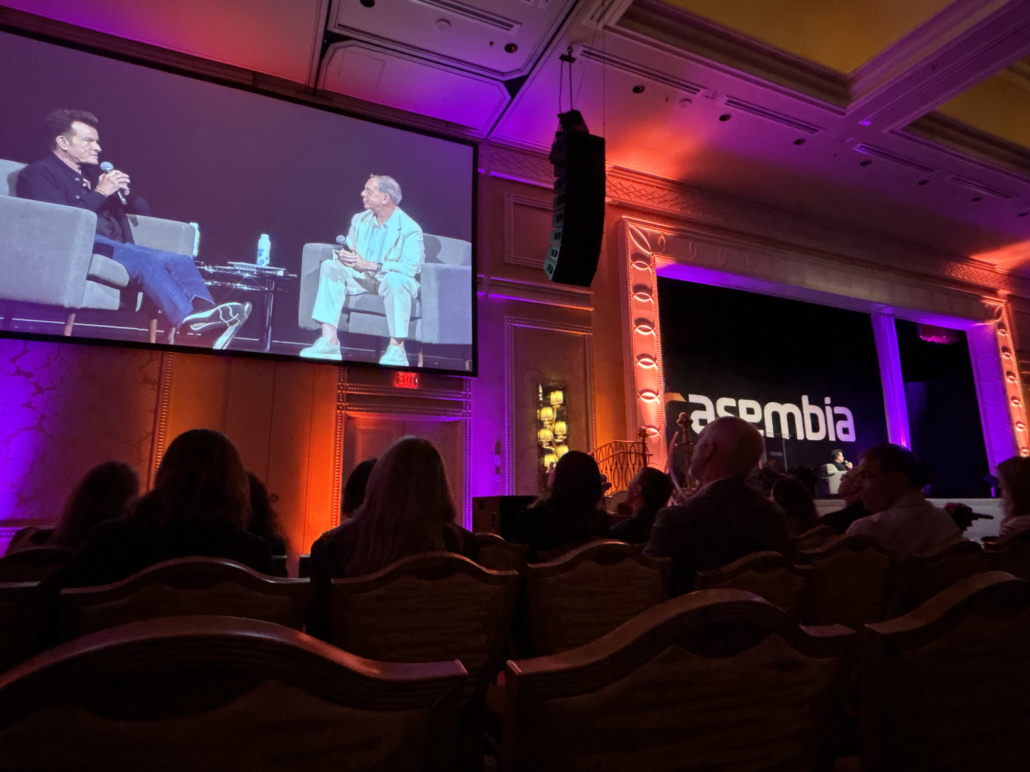
During the General Session, Charlie Sheen was candid about what it actually feels like to be a patient starting a new specialty medication.
He referred to the “shame shivers,” a full-body physical response to the weight of stigma. A real, visceral thing that happens before a patient can even name what they’re feeling.
When we talk about adherence barriers, we tend to reach for the measurable ones: cost, complexity, side effects. But the barriers that show up first are often emotional such as the fear of what people will think, or the hesitation at the pharmacy counter.
AI Is Everywhere. So Is Confusion.
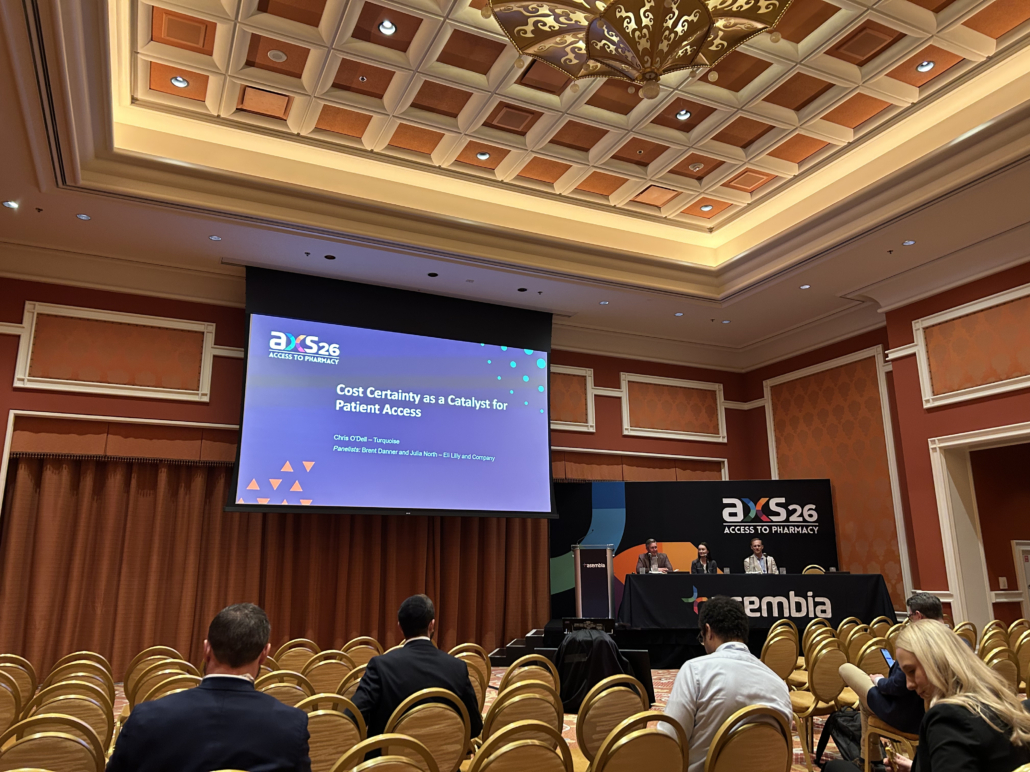
Cost Certainty as a Catalyst for Patient Access, led by Turquoise Health and Eli Lilly, surfaced a number that stopped the room: two million messages per week are being sent to AI tools to help patients understand their health insurance costs and out-of-pocket expenses.
The problem? LLMs are drawing from inaccurate or outdated sources. They’re returning broad ranges that confuse more than they clarify. Patients are making decisions about whether to start a therapy based on numbers that aren’t real.
It’s a sharp example of a broader tension playing out across the industry. AI is being deployed into the patient experience at speed. Patient trust is not keeping pace.
The session’s central argument was that cost certainty could meaningfully increase patient starts and reduce the uncertainty that causes patients to hesitate or opt out before they’ve even begun. Patients don’t care what healthcare costs in the abstract. They care what it costs them.
Regulatory momentum is building behind this. Patient expectations are shifting. The “black box” era of healthcare pricing is under pressure from multiple directions.
For Pleio, this resonated on a specific level: the same principle that applies to cost applies to every dimension of the patient journey. Uncertainty is a barrier. Clarity, delivered by a person who understands what that patient is facing, is what moves them forward.
The Patient Support Ecosystem Is Being Rebuilt
Sessions on the future of patient support were consistent in one direction: the hub-and-spoke model of patient services is being reimagined. The question isn’t whether manufacturers will invest in patient support. The question is what that support looks like and whether it’s actually built around patients or around process efficiency.
The gap between those two things is where patients get lost.
What the most compelling sessions had in common: they centered on the quality of the patient relationship, not the volume of patient touchpoints. They distinguished between programs designed to check boxes and programs designed to keep patients on therapy.
What We’re Taking Home from Asembia 2026
Asembia 2026 confirmed a few things for us.
The conversation the industry is having about emotional barriers and what it means to support patients throughout a medication journey are conversations Pleio has been having with our partners for years.
The data from our AI platform OLLIE continues to surface what’s happening underneath adherence conversations: loneliness, fear, and knowledge gaps appear frequently and often affect treatment decisions.
We left Vegas energized by the conversations we had and are ready for what’s next. When patients feel supported, they stay on therapy. That’s what we’re building at Pleio, and weeks like this one remind us why it matters.